
LIBS Spectroscopy: Real-Time Material Analysis
LIBS Spectroscopy: Real-Time Material Analysis
Introduction
LIBS spectroscopy is rapidly becoming a key technology for real-time material analysis in industries where speed and accuracy are critical. In sectors such as mining, agriculture, and the chemical industry, precise material analysis is essential for making fast and reliable decisions.
However, traditional laboratory-based methods are often slow, costly, and poorly adapted to real-world conditions.
In this context, Laser-Induced Breakdown Spectroscopy (LIBS) emerges as an innovative solution, enabling fast, accurate, and in-field material analysis.
What Is LIBS Spectroscopy?
LIBS (Laser-Induced Breakdown Spectroscopy) is an advanced chemical analysis technology that uses a high-energy laser to determine the elemental composition of a material.
It enables real-time material analysis without any sample preparation, making it highly efficient for industrial applications.
How LIBS Works
The LIBS process is based on four key steps:
Laser Ablation
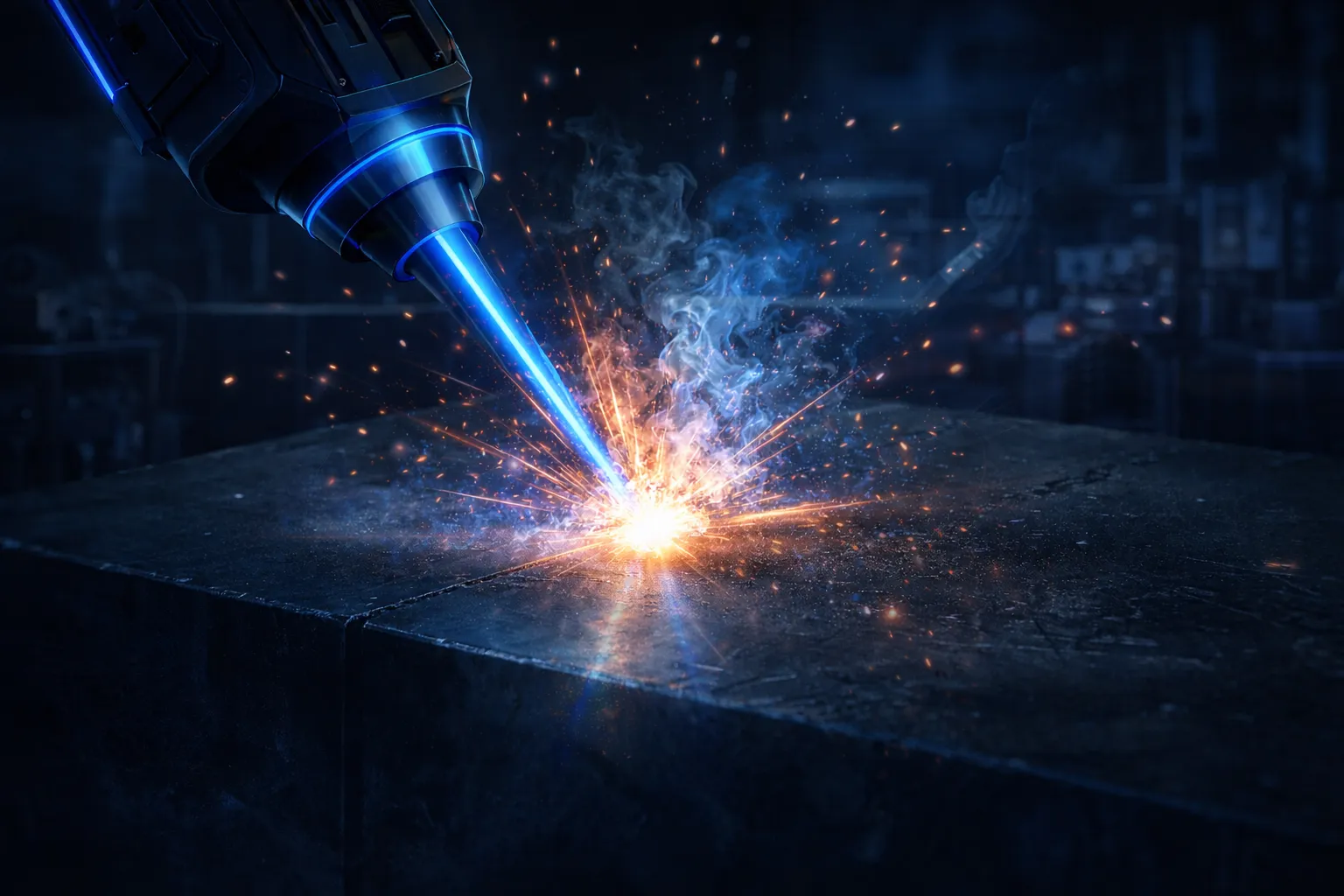
A pulsed laser is focused on the sample surface, removing a microscopic amount of material.
Plasma Formation
The laser impact generates a high-temperature plasma composed of excited atoms.
Spectral Capture
The plasma emits characteristic light (emission spectrum), which contains information about the elements present.
Data Analysis
Spectral signals are analyzed to determine the precise chemical composition of the material.
Limitations of Traditional Material Analysis
Despite their accuracy, traditional laboratory analysis methods present several limitations:
- ⏳ Long processing times (transport + lab analysis)
- 💰 High operational costs
- ⚠️ Sample preparation requirements
- ❌ Lack of flexibility in field conditions
These challenges are particularly critical when analyzing heterogeneous materials, such as ores, soils, and complex chemical solutions.
Why LIBS Is Transforming Material Analysis
LIBS technology directly addresses the limitations of traditional methods.
Real-Time Analysis
Results are delivered instantly, enabling faster decision-making.
No Sample Preparation
Direct measurement simplifies workflows and reduces operational complexity.
Multi-Element Detection
LIBS enables the detection of multiple elements in a single measurement.
In-Field Deployment
Systems can be used directly in industrial environments.
Reagent-Free, Single Measurement Analysis
Unlike traditional methods, LIBS enables reagent-free analysis and can detect multiple elements — including trace elements — in a single measurement, significantly reducing costs and operational constraints.
The Role of AI in LIBS Technology
The integration of artificial intelligence enhances LIBS performance, especially for complex and heterogeneous materials.
Machine learning enables:
- Advanced interpretation of spectral data
- Improved analytical accuracy
- Reduced errors caused by material variability
This leads to more reliable real-time material analysis, even in challenging industrial environments.
LIBS + AI: Laboratory-Grade Accuracy
Photons Analysis combines high-frequency laser ablation with proprietary machine learning models to improve analytical precision.
This approach enables real-time chemical analysis with accuracy comparable to laboratory methods.
According to available information, the deviation from standard lab analysis can be less than 2%, while allowing detection from major elements down to trace-level concentrations.
Industrial Applications of LIBS
LIBS is widely used across multiple industries requiring fast and reliable material analysis:
Mining
Real-time ore grade analysis to optimize extraction and reduce losses.
Agriculture
Soil analysis and fertility mapping to improve crop performance.
Chemical Industry
Non-contact analysis of complex or corrosive liquids.
Environmental Monitoring
Detection of pollutants and heavy metals.
Business Impact of Real-Time Material Analysis
Implementing LIBS-based solutions allows companies to:
- Reduce analysis costs
- Improve decision accuracy
- Accelerate industrial processes
- Minimize operational risks
Real-time material analysis becomes a strategic advantage for industrial performance.
Conclusion
LIBS spectroscopy represents a major advancement in material analysis technology. By enabling fast, accurate, and in-field measurements, it meets the growing demands of modern industries.
Combined with artificial intelligence, it transforms traditional analysis into a real-time, data-driven decision-making tool.
Looking to enhance your real-time material analysis capabilities?
Discover how LIBS and AI-powered solutions can transform your industrial operations.